Dietary Trends and Information Sources Among Breast Cancer Patients as a Factor of Ethnicity
Objective:
The data for the study was obtained via paper-based surveys, including scale-based, Likert-scale, binary-response, and multiple-response items for a total of 462 participants. The primary objective was to identify post-diagnosis dietary changes among breast cancer patients and evaluate how these trends vary by ethnicity. A secondary objective was to explore the way patients evaluate dietary and medical information as trust-worthy.
Data Preparation:
- Cleaned and validated data collected via paper-based surveys, removing any duplicate cases and correcting any erroneous imputations by the researchers.
- Matching variables for Hebrew and Arabic surveys, and removing any irrelevant features.
- Transforming features to the correct data types (e.g., numeric, binary, etc…)
- Removing items that did not meet a pre-defined response rate
Statistical Analysis
1. Sample Size and Power
- During the data collection phase, calculated the needed sample size to obtain a given effect size and power level, taking into account multiple comparisons and p-value corrections.
2. Descriptive and Exploratory Analysis
- Compared demographic and clinical characteristics by ethnicity, using parametric and non-parametric tests.
3. Comparing Dietary Preferences
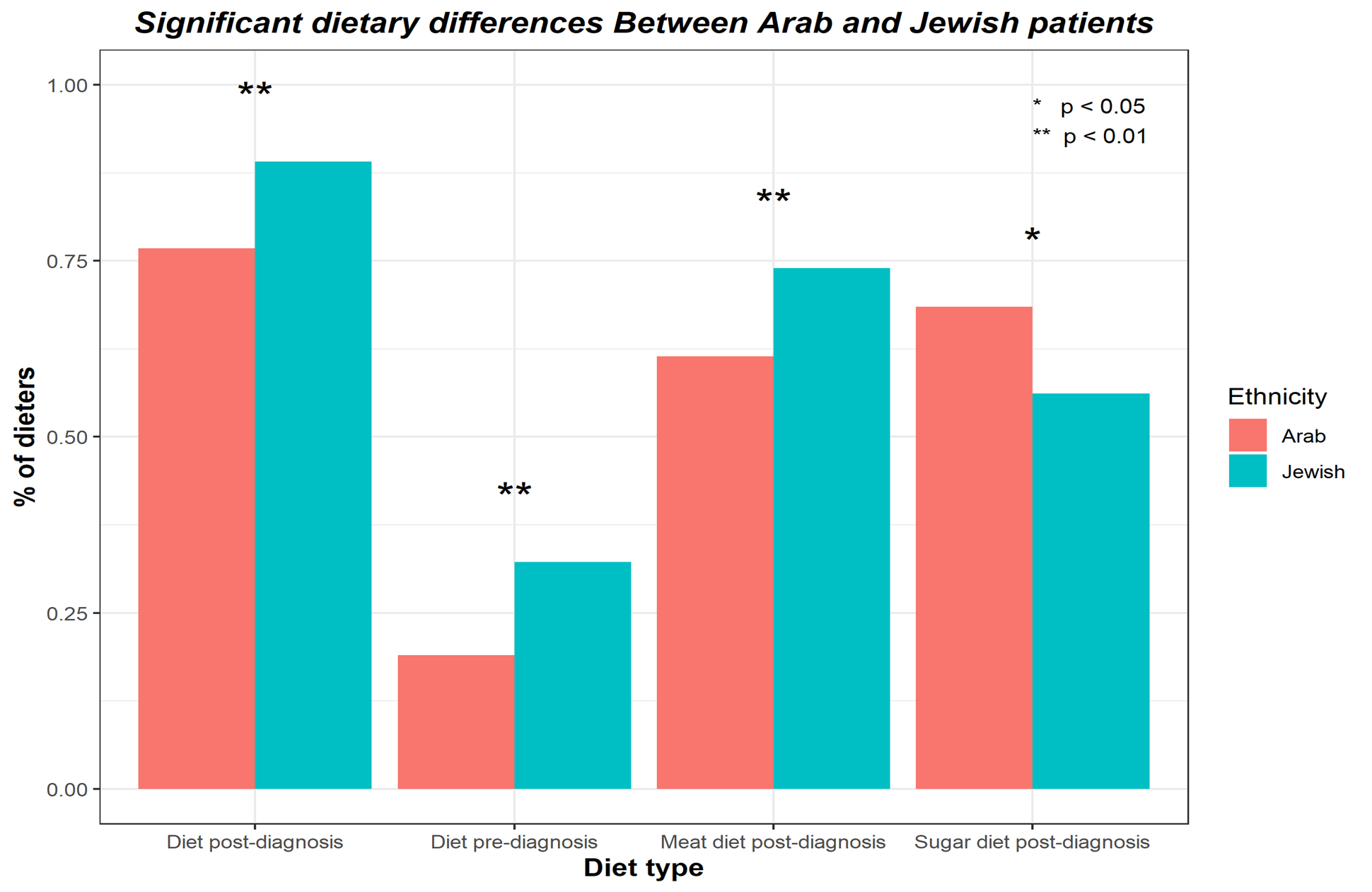
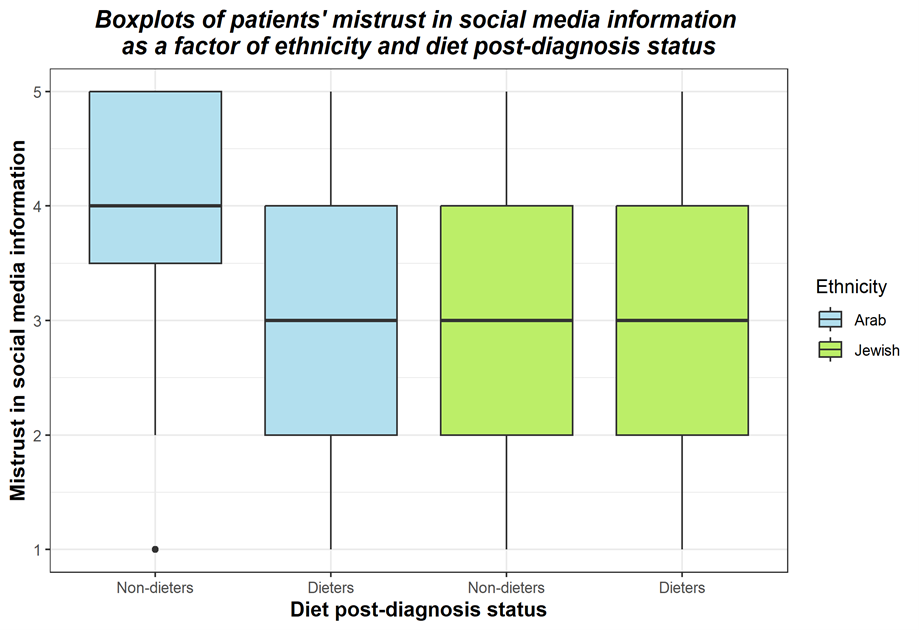
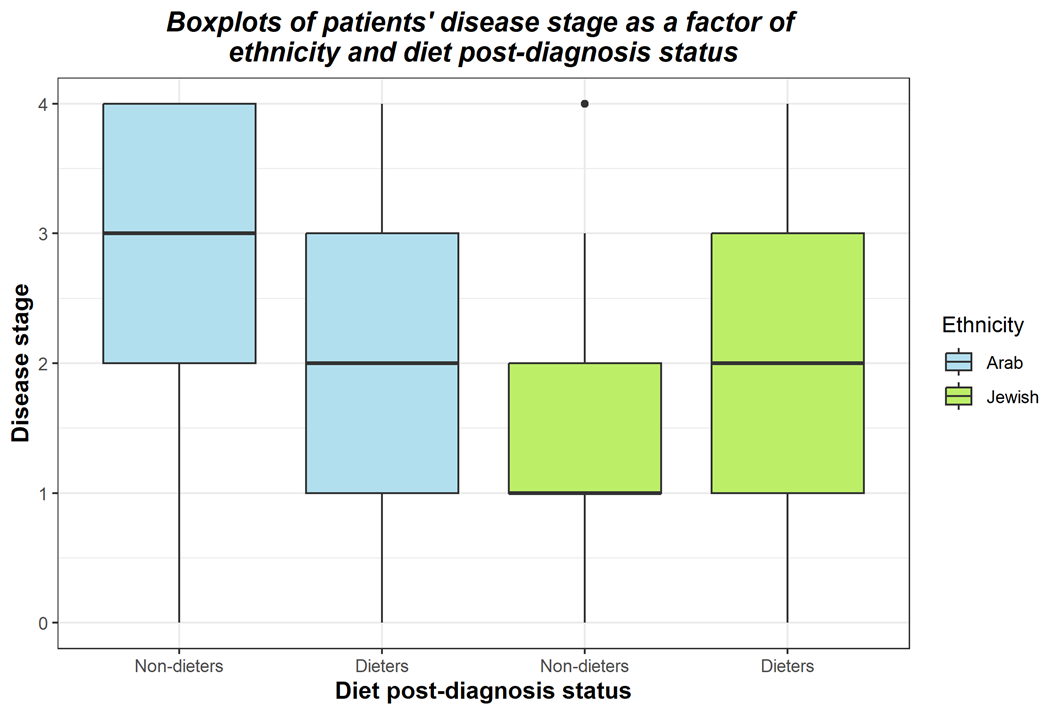
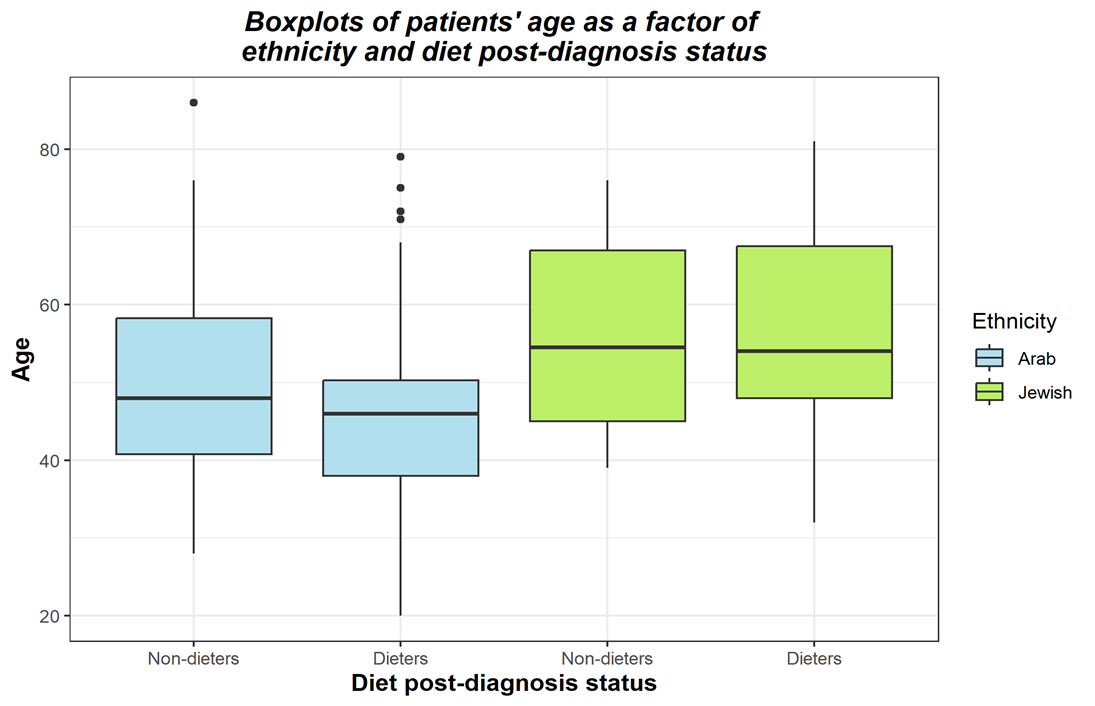
- Statistical analyses were selected based on the nature of the data: Wilcoxon and Kruskal-Wallis tests for Likert-scale and non-normally distributed continuous data, and chi-squared tests for binary and categorical responses.
The main results of the study are visualized below:
Reporting Results
- Cleanly summarized statistical methods and results in a journal oriented fashion.
- Summarized results cleanly in tables.
- Created publication-quality visualizations (histograms and boxplots).
- Communicated results to non-technical medical researchers and assisted in drawing appropriate conclusions.